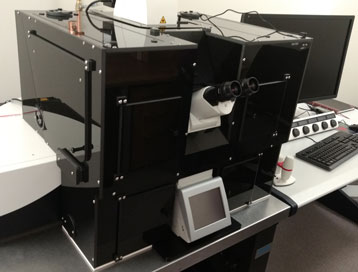
Gallios Flow Cytometer

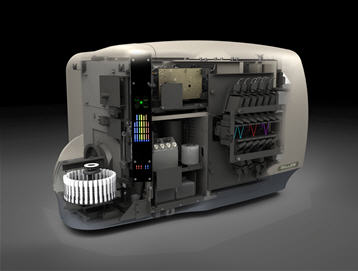
The Gallios flow cytometer is an ultra sensitive high speed flow cytometer with 3 solid state lasers and 10 fluorescence colors. Its high stability and sensitivity allow very dim and rare populations to be accurately analyzed. Gallios has a customized forward scatter to achieve the most accurate size measurement and optimized electronics for high resolution and fast, accurate, and efficient processing.

The Gallios is the next generation flow cytometer from the existing Beckman Coulter FC500 flow cytometer in the Core facility. Data acquired by Gallios can be analyzed with Kaluza analysis software, which is available for users to analyze data on their own computers. In addition, data collected on the FC500 instruments can also be analyzed on the new Kaluza software.

Location:  EOHSI Building, Room 347
DOWNLOAD MORE DETAILS

Beckman Coulter CytoFLEX Cytometer

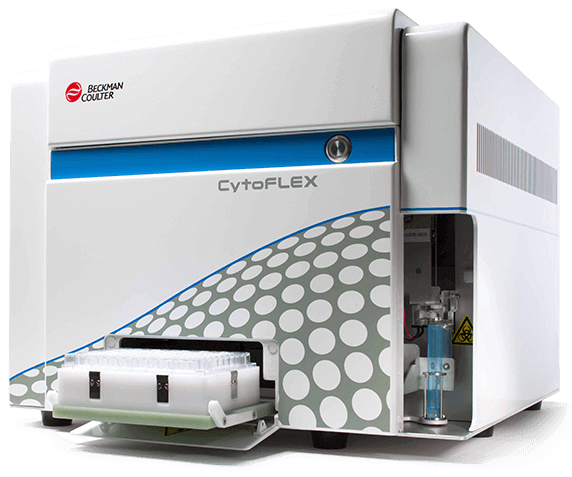
The Beckman Coulter CytoFLEX is a compact bench-top flow cytometer for research use. It can acquire 10 parameters on a single sample excited by the 405nm, 488nm, and 638nm lasers, up to 8 fluorescent colors, plus forward and side scatter data channels.

CytoFLEX Cytometer uses the sample peristaltic pump to take sample and calibrates sample volume delivery for absolute cell counts without using beads. It can process samples at flow rate between 10 uL and 240 uL per minute providing high sensitivity and adjustable flow rates.

The CytExpert software provides 7 decade of data display and the event collection rate can be up to 30,000 events/second.

Sample Input Format: 96 well-plate.

Location:  EOHSI Building, Room 347
DOWNLOAD MORE DETAILS

Beckman Coulter Astrios EQ High Speed Cell Sorter

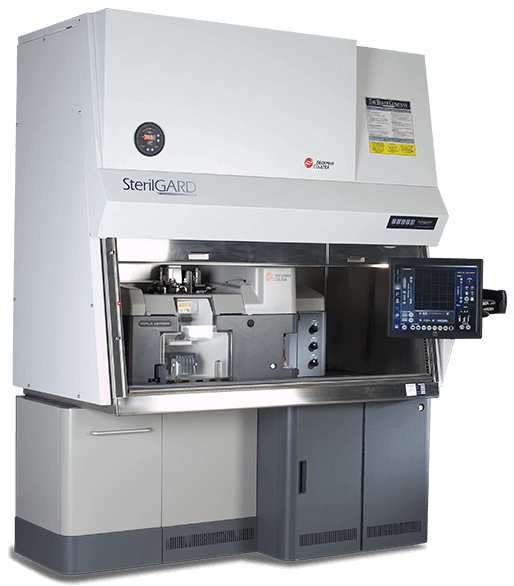
Six-way jet-in-air sorter with 4 lasers (405nm, 488nm, 561nm, 640nm) and 14 fluorescent color capability. It has dual forward scatter PMTs that allow researchers to analyze biological samples ranging in size from 0.2um to 30um. The instrument is capable of simultaneous 1-6 way sorting and is equipped with Cyclone sorting for single cell sorting. Available nozzle sizes are 70um and 100um. It is contained within a Baker SterilGARD Class II biological safety cabinet and can be used for sorting BSL2 samples.

Location:  EOHSI Building, Room 346

DOWNLOAD MORE DETAILS

Leica TCS SP8 Confocal Microscope

This laser based confocal system permits measurements of fluorescently labeled tissue sections, individual cells, or particles adhered to matrices over a wide selection of visible wavelengths. The instrument is equipped with 4 air cooled lasers allowing for excitation wavelengths of 405, 488, 552 and 638 nm.

Analysis of immunofluorescence as well as functional and biochemical kinetic studies can be performed on viable cell samples. The instrument is equipped with a Quad Black live cell chamber allowing for temperature control and allowing for long term observation of viable cell cultures. Intracellular distribution of fluorescence can also be quantified by way of 3D imaging. The instrument has extremely high sensitivity and can differentiate between closely emitting chromophores.

Location: Ernest Mario School of Pharmacy, William Levine Hall, Room 002

DOWNLOAD MORE DETAILS

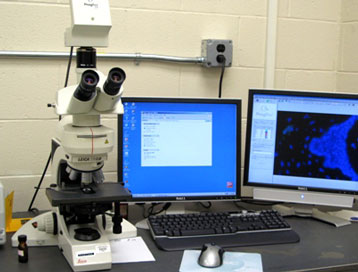
Leica DMLB Fluorescence Microscope with Jenoptik Digital Camera

Fluorescence is one of the most commonly used physical phenomena in biological and analytical microscopy, mainly because of its high sensitivity and high specificity. Fluorescence is a form of luminescence. Fluorescence microscopy allow users to determine the distribution of a single molecule species, its amount and its localization inside or outside of a cell.

The Leica DMLB upright microscope is optimized for fluorescence microscopy with a fiberoptic halide arc lamp and filter sets to detect FITC (excitation: Band pass 470/40; emission: Long pass 515), DAPI (excitation: Band pass 360/40; emission: Long pass 425) and rhodamine (excitation: Band pass 540/45; emission: Long pass 590). A separate filter for the detection of Pacific Blue (excitation: Band pass 405/30; emission: Long pass 450) is also available. The Jenoptic CF Scan digital camera and resident software allow for capture and overlap of bright field and fluorescent images.

Location: Ernest Mario School of Pharmacy, William Levine Hall, Room 002